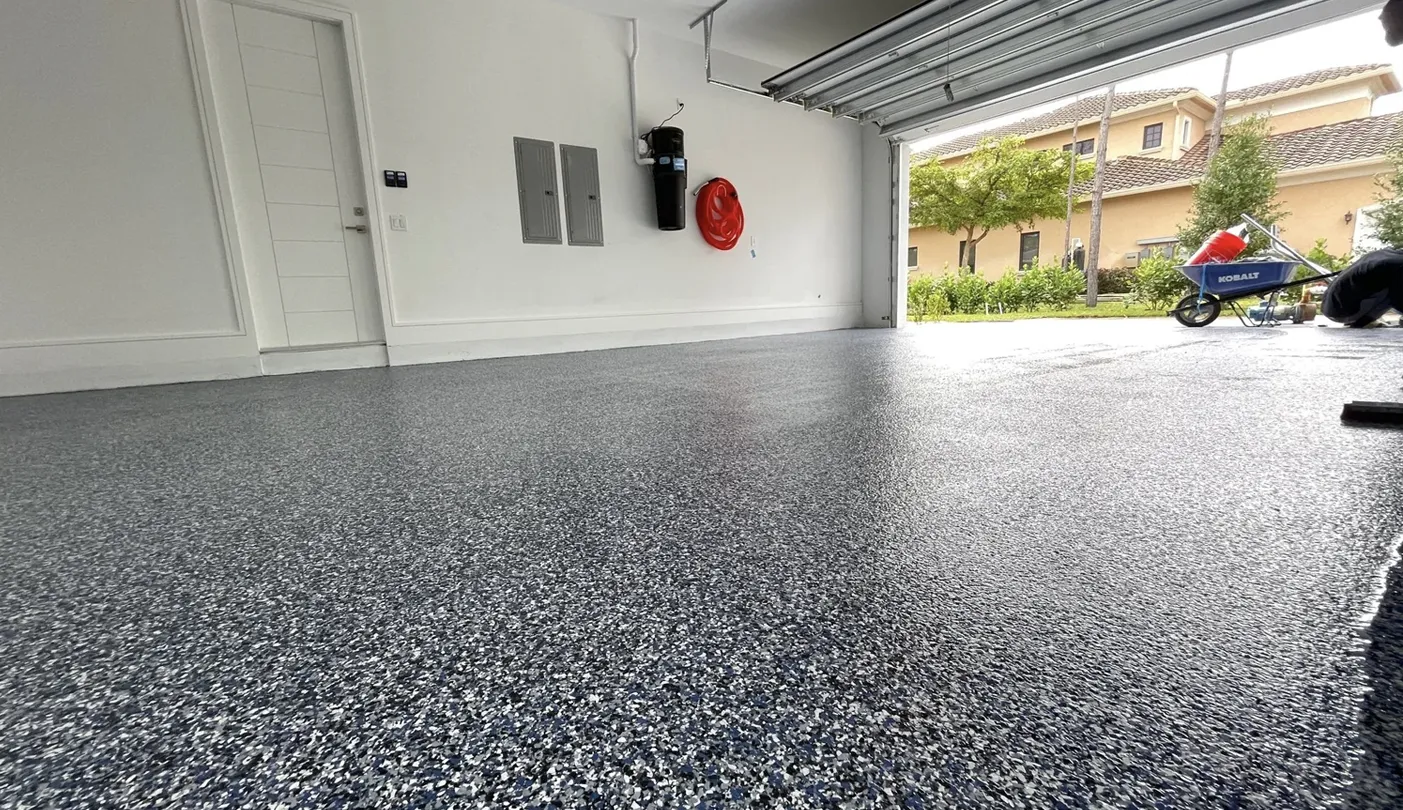

Hiring the right epoxy flooring San Antonio team makes a real difference in the final result. Garage floors take a beating in San Antonio: hot tires, dropped tools, oil drips, and constant temperature swings between a scorching summer slab and an air-conditioned interior. Epoxy flooring has become the go-to solution for homeowners who are tired of cracked, stained concrete, but most people have the same questions before committing. What does it actually cost?
How long does it hold up in our heat? And is it something a determined DIYer can pull off? This guide answers all of it with real numbers and a clear look at what separates a floor that lasts 15 years from one that peels within months.
Table of Contents
- How Much Does Epoxy Flooring Cost in San Antonio?
- Why Epoxy Works Well for Texas Garages
- Low VOC Epoxy and Indoor Air Quality
- DIY vs. Professional Epoxy Installation
- How Long Does Epoxy Flooring Last?
- Common Epoxy Flooring Mistakes to Avoid
- What to Expect From Our Process
- Choosing the Right Epoxy Flooring Contractor
- Frequently Asked Questions
Epoxy flooring San Antonio: How Much Does Epoxy Flooring Cost in San Antonio?
Epoxy flooring costs depend on square footage, existing concrete condition, and the type of system installed, with decorative flake or metallic finishes running higher than a solid color base coat. At A+ Painting Contractor, we inspect your concrete and provide a written, itemized estimate so you know the full cost before any work begins. Homeowners searching for epoxy flooring san antonio services should always verify licensing and insurance first.
| Space Size | Typical Cost Range | Estimated Timeline |
|---|---|---|
| 1-car garage (up to 250 sq ft) | $1,200 to $2,500 | 2 to 3 days |
| 2-car garage (400-500 sq ft) | $2,000 to $4,000 | 2 to 3 days |
| 3-car garage or large space | $4,000 and up | 3 to 4 days |
Why Epoxy Works Well for Texas Garages
San Antonio’s wide temperature swings, from freezing winter mornings to scorching summer afternoons, cause bare concrete to expand and contract, which leads to cracking and surface dusting over time. A properly installed epoxy coating seals the concrete and adds a layer of flexibility and chemical resistance that stands up to hot tires, dropped tools, and the oil, coolant, and gasoline spills that are common in any garage.
Unlike bare concrete, epoxy floors are also far easier to clean, since spills wipe up without staining the way they would on untreated concrete. Epoxy floors also brighten a garage significantly, reflecting more light than gray concrete, which many homeowners notice makes the space feel larger and more usable for projects, storage, or a home gym.
Low VOC Epoxy and Indoor Air Quality
Modern epoxy systems have come a long way from the strong-smelling products of years past. We use low-VOC epoxy formulas that significantly reduce fumes during and after installation, which matters most for garages that are attached to living space or used as a workshop. Water-based epoxy systems in particular offer lower odor and faster cure times than older solvent-based products, without sacrificing durability. That is exactly what a qualified epoxy flooring San Antonio team should deliver.
DIY vs. Professional Epoxy Installation
Big box store epoxy kits can look tempting, but most DIY epoxy failures come down to the same root cause: inadequate surface preparation. Concrete needs to be properly profiled, usually through diamond grinding or acid etching, so the epoxy can chemically bond to the surface rather than simply sitting on top of it. Professional installation also accounts for moisture testing, since trapped moisture under a coating is one of the leading causes of bubbling and peeling. A professionally installed floor with proper prep can outlast a DIY job by a decade or more.
How Long Does Epoxy Flooring Last?
A professionally installed epoxy floor typically lasts 10 to 15 years in a residential garage before it needs a fresh topcoat, and even longer in spaces with lighter vehicle traffic. Commercial-grade epoxy systems with added top coats can last even longer under heavy use. The single biggest factor in longevity is surface preparation, followed closely by the quality of the epoxy system used and whether a protective UV-stable topcoat was applied to prevent yellowing from sun exposure through garage windows or open doors.
Common Epoxy Flooring Mistakes to Avoid
The most common cause of epoxy failure is applying it over concrete that was not properly cleaned, degreased, and profiled, which prevents a lasting chemical bond. Rushing the cure time before driving on the floor or moving heavy equipment back in is another frequent mistake, since epoxy needs adequate time to reach full hardness. Homeowners sometimes also choose a bargain epoxy kit without a UV-stable topcoat, which can cause the finish to yellow or amber over time when exposed to sunlight.
Finally, skipping a moisture test on older concrete slabs can lead to bubbling and delamination months after installation, which is why we test every slab before starting work. It is also worth noting that not every stain will fully lift from bare concrete before coating, so we set realistic expectations upfront about what the finished floor will look like in areas with deep, longstanding oil or rust stains.
What to Expect From Our Process
Every epoxy flooring project begins with a free inspection of your concrete, including a moisture check and an assessment of existing cracks or damage. From there we provide a written estimate, properly grind or etch the surface for maximum adhesion, apply a primer coat, and finish with a durable epoxy system and protective topcoat. We are licensed and insured, and every project is backed by our satisfaction guarantee. You can request a free quote to see numbers for your own garage or space. This is the standard homeowners should expect from any epoxy flooring San Antonio company.
Choosing the Right Epoxy Flooring Contractor in San Antonio
- Confirm licensing and insurance, and ask to see proof.
- Ask what surface preparation method they use, such as grinding versus etching.
- Get a written, itemized estimate before work begins.
- Ask whether a moisture test is included before installation.
- Check recent, verifiable reviews from San Antonio homeowners.
- Clarify the warranty on both labor and the epoxy system itself.
You can see real feedback from San Antonio homeowners on our client reviews page, and browse our other services on the full services page.
Frequently Asked Questions
How much does epoxy flooring cost in San Antonio?
Most residential epoxy flooring projects run $1,200 to $4,000 or more depending on garage size, existing concrete condition, and the type of finish selected, such as solid color versus decorative flake.
How long does epoxy flooring last?
A professionally installed epoxy floor typically lasts 10 to 15 years before needing a fresh topcoat, with proper surface preparation being the biggest factor in how long the finish holds up.
Can I install epoxy flooring myself?
While DIY kits exist, most failures come down to inadequate surface preparation and skipped moisture testing. Professional installation accounts for both, which is why professionally installed floors typically last significantly longer.
Is epoxy flooring safe with low fumes?
Yes. We use low-VOC and water-based epoxy systems that significantly reduce fumes during and after installation compared to older solvent-based products, making them a better choice for attached garages.
Will epoxy flooring crack or peel over time?
A properly installed epoxy floor with correct surface prep and a UV-stable topcoat resists cracking and peeling for many years. Most failures happen when prep work was skipped or a bargain product was used without proper preparation. For licensing and consumer protection standards, see the Texas Department of Licensing and Regulation.
Ready for a garage floor that actually holds up? Get a free, no-obligation quote from A+ Painting Contractor today, or call (726) 208-9696.
Ready for Epoxy Flooring in San Antonio?
Upgrade your garage or floor with a durable epoxy coating built for the San Antonio climate. Get a free quote or call today.